
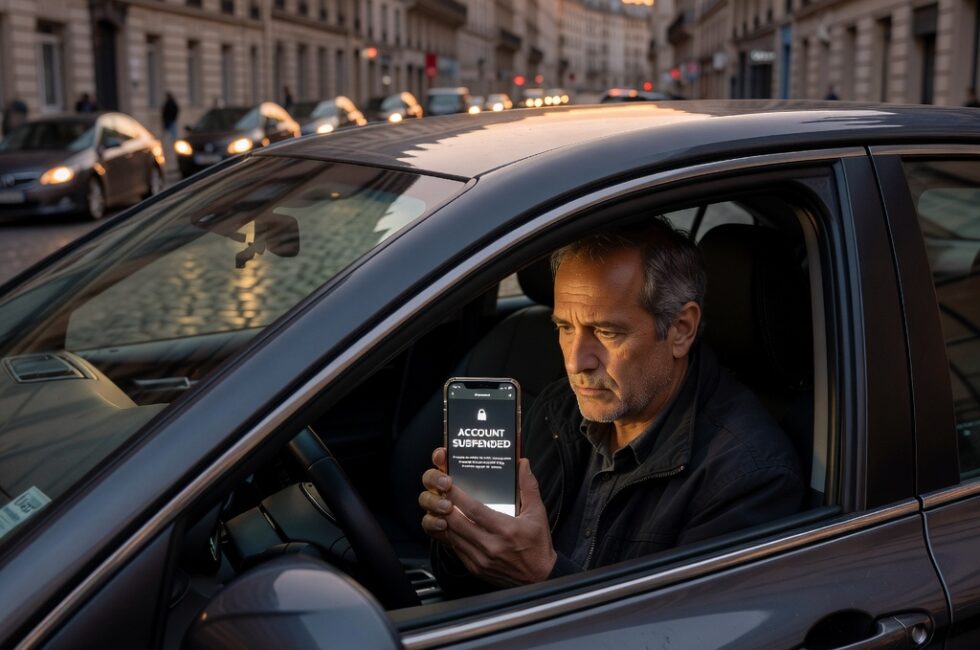
The Dutch Data Protection Authority is fining Uber €825 million over automated driver suspensions. That is nearly $1 billion. It is also the second largest penalty issued under Europe’s GDPR.
Here is why this is not just another big-tech slap on the wrist. Uber used automation to suspend drivers. Those drivers lose work the minute the account goes dark. Europe’s privacy regulator just put a price on that kind of system, and the number is large enough that even people who never open the Uber app should pay attention.
What the Dutch fine actually covers
Strip away the press language and you get a short list of facts.
- The regulator is the Dutch Data Protection Authority.
- The company is Uber.
- The amount is €825 million, framed as nearly $1 billion.
- It is the second largest penalty issued under Europe’s GDPR.
- The issue is automated driver suspensions.
That last item is the whole ballgame. This is not a story about a banner on a website. This is a story about software making a call that can zero out someone’s week.
Why an automated suspension hits so hard
GDPR is the European data protection law most Americans only meet as a cookie popup. The serious part of that law is about personal data and decisions. A rideshare account is stuffed with personal data. Location. Ratings. Trip history. Identity documents. When that pile of data gets fed into a system that can lock a driver out, the driver is not a user anymore. The driver is the product of a decision they cannot see and often cannot fight.
I fix systems for a living. A system that can take your livelihood and hand you a help article is not a support process. It is a wall. Regular people on the other side of that wall are the ones I worry about. They are not in the boardroom. They are trying to make a car payment.
This does not stay in the Netherlands
Uber is a global platform. The same style of automated enforcement shows up anywhere the app runs, including here in the United States. Europe happens to have a regulator willing to swing a very large stick. We do not have a GDPR clone with that kind of punch. So a fine this size is one of the few outside pressures that can force a global company to rethink how the machine treats the people who keep it fed.
Will that rewrite the driver app in Portland, Maine tomorrow? Probably not. Will the lawyers and product teams suddenly care more about human review, appeal paths, and how long data sits in a punishment model? That is how these things usually travel.
What you should actually do with this
If you drive, deliver, or hustle on a platform, treat the app like a landlord that can change the locks overnight.
- Keep your own records. Screenshots of ratings, trip problems, and support chats. When the account dies, the company still has the database. You have whatever you saved.
- Do not trust a pretty appeal button. Ask whether a person is looking at your case. If you cannot get a name or a ticket that goes somewhere, you are still talking to the machine.
- If you run a small business and you automate anything that can cut off a contractor, a customer, or an employee, sit up. Europe just showed what it thinks that is worth. You may not be Uber, but you can still build a cruel system by accident.
- Passengers should care too. Automated bans and botched enforcement are how good drivers vanish and how bad incentives sneak into the ride you just booked.
I am not against automation. I build it. I am against a black box that can fire you at midnight and call it efficiency. Europe just sent a bill for that attitude.
Uber faces this fine. Facing it is not the same as paying it, and companies this size usually fight. Do not wait for the final receipt to get the point. If your paycheck lives inside someone else’s software, you are one automated decision away from being locked out. Act like it.
Primary Source: https://techcrunch.com/2026/08/23/uber-faces-fine-of-nearly-1b-over-automated-driver-suspensions/