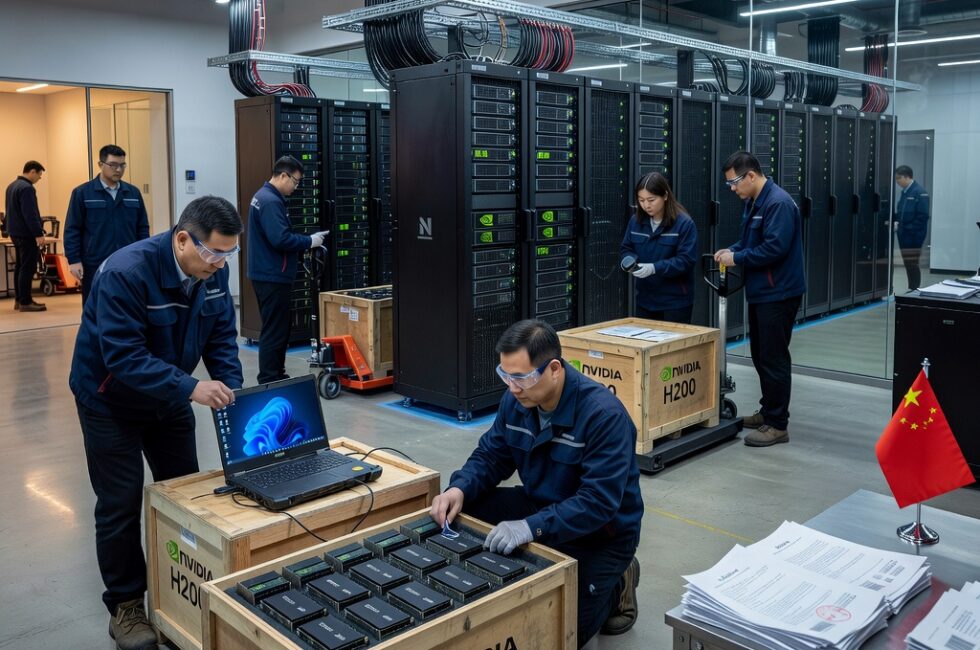
Alright, pull up a chair. Nvidia just got its first H200 AI chips into the hands of ByteDance and Tencent. Beijing loosened the import block that had been holding things up, and the GPUs started moving.
These are not your everyday graphics cards. The H200 is built for heavy AI training and inference work. It is the kind of iron that powers the big recommendation engines, chat systems, and data crunching that run behind the apps millions of people open every morning.
What actually happened
For a while the US export rules and China’s own pushback kept the newest Nvidia silicon out of Chinese data centers. That changed enough for the first H200 shipments to clear. ByteDance (the company behind TikTok) and Tencent grabbed the early batches. Other Chinese firms are expected to follow once the pipeline opens wider.
Nvidia gets to keep selling high-margin hardware. China gets access to current-generation AI horsepower instead of waiting on slower domestic alternatives or older chips. The US still controls the most advanced designs, but the gap just got a little narrower in practice.
Why a regular person should care
You do not need to run a data center to feel this. The AI features showing up in your phone, search results, social feeds, and work tools all ride on this kind of hardware. When ByteDance and Tencent get more of it, they can train bigger models faster and push those models into the products you already use.
That can mean slicker recommendations and smarter filters. It can also mean more aggressive data collection and tighter algorithmic control over what you see. Chinese tech giants have a track record of building systems that serve the state as much as the user. More compute in their hands accelerates that work.
On the flip side, US companies lose a bit of the exclusive edge they have been counting on. If the playing field levels even a little, the pressure to keep innovating (or to lock down exports even harder) goes up. Either way, the cost and availability of AI tools for small businesses and regular users can shift.
The practical takeaways
First, watch where your data goes. Apps and services backed by companies with fresh H200 clusters will get better at profiling you. Turn off what you do not need. Use privacy tools that actually work.
Second, do not assume American tech has a permanent lead. Hardware moves. Policy moves. The systems you rely on today can look different in two years if the compute balance changes.
Third, for anyone building or buying AI tools at work, pay attention to the supply chain. Chips this powerful are still scarce. Delays, price spikes, or sudden policy flips can hit projects that seemed solid last quarter.
I have spent decades watching big systems get built on top of regular people’s lives. When the hardware that runs those systems changes hands this fast, the effects show up in your daily feed, your job tools, and the quiet collection of your habits. Stay sharp. Ask who benefits when the next round of AI gets faster. And keep control of what you can.
Primary Source: https://www.tomshardware.com/pc-components/gpus/first-nvidia-h200-shipments-reach-bytedance-and-tencent-as-beijing-loosens-its-import-block