
Pull up a chair. We need to talk about the little silicon brain inside your smartphone and how the folks who make it play a quiet sorting game that almost nobody explains to regular people.
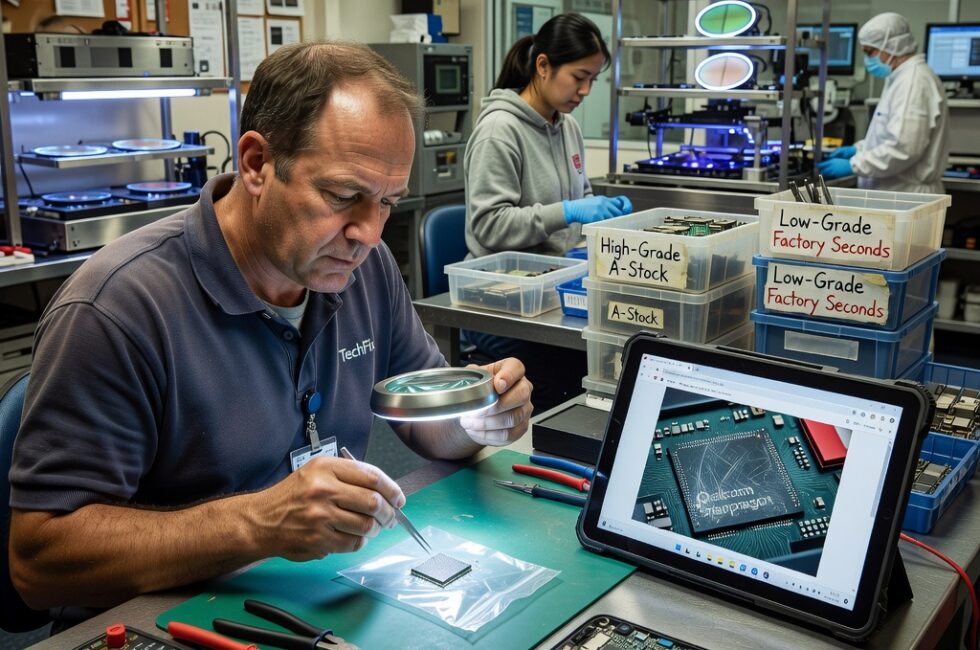
That game is called chip binning. After they stamp out a big batch of processors on a wafer, they test every single one. Some run cooler and faster. Some barely meet the minimum. The good ones get the premium label and higher clock speeds. The rest get dialed back, locked down, and shipped into cheaper phones or even the same model with a silent downgrade. Same chip name on the box. Different reality inside.
How the Sorting Actually Works
Silicon manufacturing is messy. Tiny flaws pop up no matter how clean the factory is. Instead of throwing the weaker chips away, companies test them hard and sort them into performance bins. Top-bin chips can hit higher speeds without melting or draining the battery too fast. Lower-bin chips get lower clock limits, sometimes fewer cores enabled, or stricter power caps so they stay stable.
You see this with Snapdragon chips, Dimensity parts, Apple’s A-series and M-series silicon, Exynos, you name it. One wafer can feed flagship phones, mid-range handsets, and even tablets. The marketing sheet just says the chip name. It rarely tells you which bin you got.
Why Normal People Should Care
Because you are the one who pays the bill and lives with the results. Two phones with the exact same processor name can feel different in daily use. One stays cool during maps and video calls. The other throttles, gets warm in your pocket, and chews battery faster. You did not buy a lemon on purpose. The factory just sorted the silicon and the brand decided where to put it.
This hits hardest when you stretch for a flagship or a “pro” model thinking you are getting the best version of the chip. Sometimes you are. Sometimes you are getting a carefully limited version that still carries the same name so the marketing stays clean. Battery life, heat, long-term performance under load, all of it can shift based on which bin landed in your device.
It also messes with upgrades and comparisons. Your buddy swears his phone is snappier even though the reviews say identical specs. He might have drawn a better bin. Or the manufacturer quietly improved the binning yield later in the production run and never said a word.
The Real-World Tradeoffs
Binning is not pure evil. It keeps costs down and lets more people get decent phones instead of everything being ultra-premium priced. Without it, a lot of mid-range devices would not exist or would cost a lot more. The process turns imperfect silicon into something usable instead of scrap.
But the lack of transparency is the part that grates. Spec sheets treat every chip of a given name as identical. Reviewers test one or two samples. You buy one unit and live with whatever bin showed up. There is no sticker on the box that says “top bin” or “efficiency bin” or “we locked two cores because the silicon was average.”
- Heat and throttling can vary more than the marketing admits
- Battery drain under the same tasks is not always equal across units
- Resale and long-term feel can differ even on matching model numbers
- Software updates sometimes unlock or further limit bins later
If you use your phone hard for work maps, photo editing, navigation all day, or just hate when it gets hot during a call, binning is one quiet reason two “identical” phones behave differently.
What You Can Actually Do About It
You cannot pick your bin at the store. That ship sailed at the factory. What you can do is stay skeptical of pure spec-sheet shopping. Look at sustained performance tests, not just peak benchmark numbers. Check multiple real-user reports on heat and battery after a few weeks of ownership. Prefer brands that have a track record of consistent binning or that at least talk about their silicon strategy without the usual fog.
For most folks the difference is small enough that daily life goes on fine. For people who push the hardware or who keep phones for years, it adds up. Treat the processor name as a starting point, not the final word. The silicon lottery is real.
Big chip companies and phone makers will keep doing this because it makes economic sense for them. Your job is simply to know the game exists so you do not get surprised when two phones that look the same on paper do not feel the same in your hand.
Primary Source: https://www.androidauthority.com/smartphone-processor-chip-binning-explained-3696531/