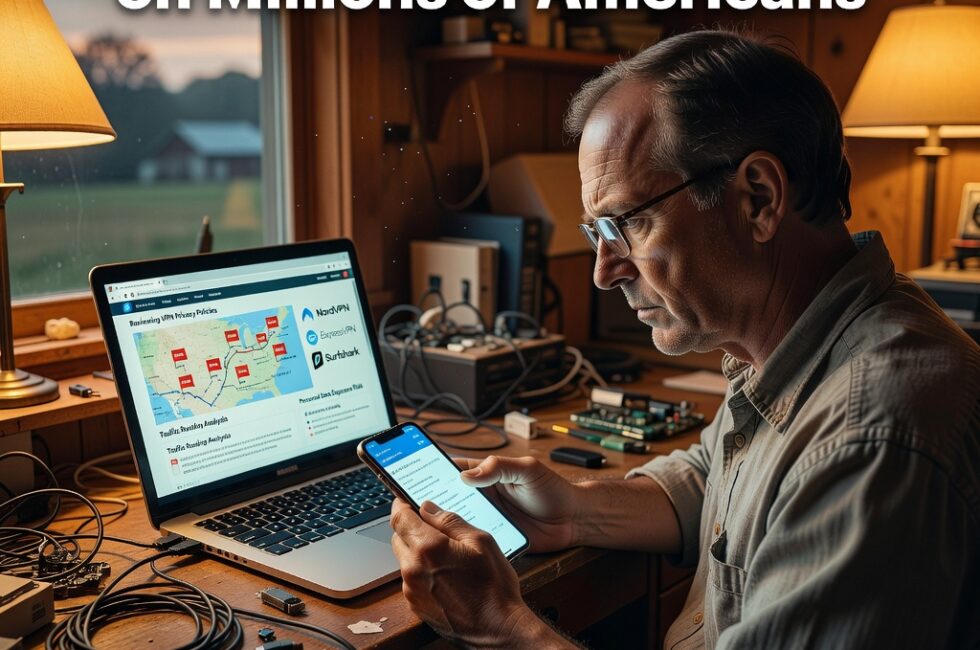
Proton VPN published a report on August 27, 2026 saying a new survey of VPN apps available in the United States shows a worryingly large number of them behave in unacceptable ways. The headline is not subtle. Shady VPNs could be spying on millions of Americans.
Douglas Crawford wrote the piece. Proton sells a VPN and is based in Switzerland, so they are not a neutral bystander here. That does not make the warning worthless. If you installed an app to protect yourself and that app is the problem, you got played.
What this survey is actually saying
The finding is simple. Plenty of VPN apps you can get in the US do not behave the way a privacy tool should. Proton calls that unacceptable. The people in the blast radius are not a tiny tech club. They are regular Americans who thought they were being careful.
That is the part that should land. Millions of people grabbed a VPN because an ad, an app store ranking, or a coworker said it would keep them safer. If a chunk of those apps are acting badly, the tool you trusted may be the thing watching you.
You handed a stranger the keys to your traffic
A VPN is a tunnel. Your phone or laptop wraps up your internet traffic and sends it to a company server. Websites then see that company’s address instead of yours. That is the whole product.
The company in the middle can see a great deal of what you do. If they are straight, they pass it along and keep quiet. If they are shady, they can watch you, keep records, and use that information in ways you never agreed to. You did not disappear from the internet. You picked a new landlord for it.
That is why a bad VPN is worse than no VPN. Without one, your internet provider already sees a lot. With a shady one, you added another set of eyes and told yourself you were safer.
What to check before you trust another VPN app
Treat a VPN like a spare key to your house. You would not hand that to a stranger from a pop-up ad.
- Find a real company with a real name and a real location. If that takes more than a few minutes, walk away.
- Be suspicious of free VPN apps. If you are not paying, someone else probably is, and they may be paying for access to you.
- Look for outside testing, not a privacy promise written by the marketing team.
- Install from the company’s own site or a store listing you verified, not from a random link.
- If you cannot explain who runs your VPN to a neighbor in one sentence, uninstall it.
This stuff pisses me off because it is predictable. Complicated systems take advantage of people who just want to check email, pay a bill, and keep their business to themselves. You do not need to become a privacy expert. You need to stop handing your traffic to an app you cannot account for.
Privacy is a system that either works or it does not. A sticker that says VPN does not make it work.
Primary Source: https://protonvpn.com/blog/vpn-privacy