
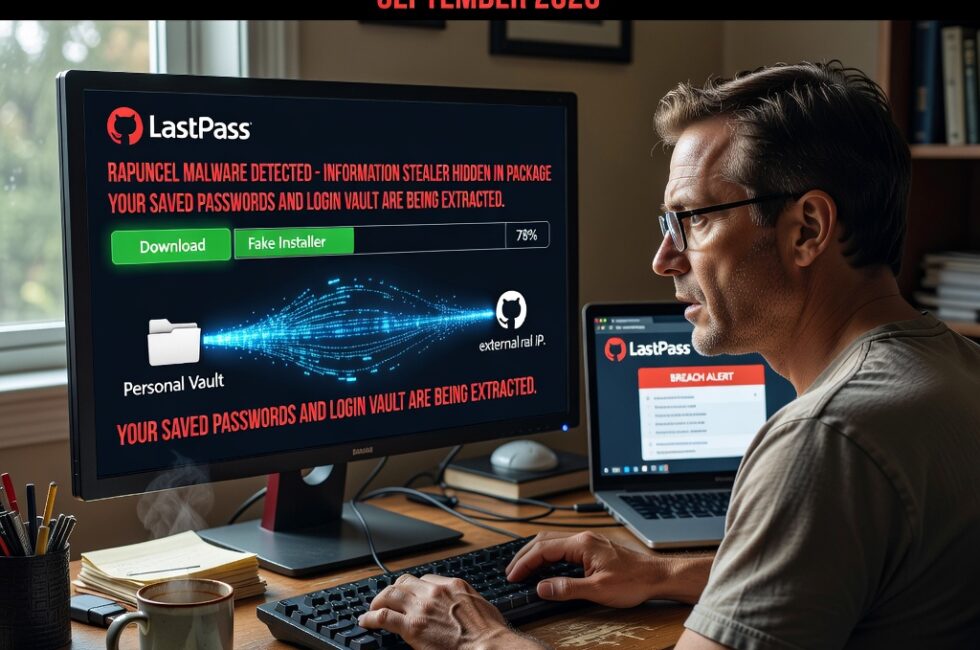
In September 2026, a malware campaign impersonated LastPass on GitHub and tricked people into installing an information stealer called Rapuncel. That malware is built to steal passwords. If you went looking for a LastPass download and grabbed it from a GitHub page, you may have installed a thief instead of a vault.
This is not some exotic lab stunt. It is a bait-and-switch aimed at regular people who just wanted their logins in one safe place.
Fake LastPass pages on GitHub
LastPass is a password manager. People use it for banks, email, shopping, and work. Attackers stood up GitHub downloads that pretended to be LastPass. The files were not LastPass. They were malware.
GitHub is where developers host code. It is not the official place to get a consumer password app. That gap is the whole scam. You search, you see a repo with the right name, you hit download, and the system fails you in one click.
Rapuncel steals what you were trying to protect
Rapuncel is an information stealer. In plain talk, it reaches into a computer and pulls passwords and other login data. Pair that with a fake LastPass installer and you get a nasty result. Someone looking for a vault instead ran a tool built to empty it.
I have watched systems take advantage of regular folks for more than 30 years. This one is blunt. You asked for a lock. They handed you a pick.
Why this trap works on regular people
People who live in GitHub check the owner, the history, and the code. Most folks do not. They want a password manager that works. They search, they click, they install. That is who this campaign is built for.
It pisses me off because the people who would benefit most from a password manager are the same people least equipped to spot a fake repo. A small business owner. A parent trying to stop using one password everywhere. They should not need a security degree to download a password app.
What to do before you install anything
Keep this simple. Treat GitHub like a workshop, not a store, when the product is a password manager. I would tell my own family the same thing.
- Only install LastPass from the official LastPass website or the official app store for your phone or browser.
- Do not download a password manager from a GitHub repository, a mirror site, or a random search result.
- If you already installed LastPass from GitHub, assume that machine is compromised. Change important passwords from a different, clean device.
- Turn on two-factor authentication on email and banking so a stolen password is not enough by itself.
- If you are not sure a LastPass download is real, do not install it. Go to the vendor’s own site and start over.
Your passwords are the keys to your life. Do not pick them up off the side of the road just because the sign said LastPass.
Primary Source: https://cyberinsider.com/fake-lastpass-downloads-on-github-pushed-password-stealing-malware/