
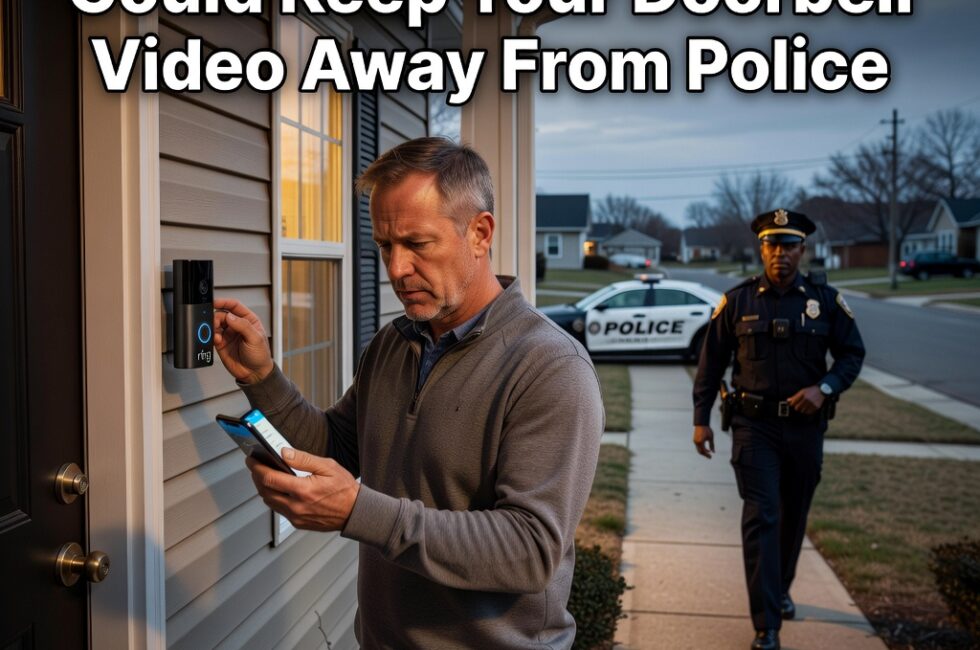
Amazon’s Ring is rolling out a new encryption system for its video doorbells and cameras that could limit what footage the company can hand over to police.
If you have one of these things on your porch, that is not a small change. For a long time, Ring kept a copy of your video on its servers. When law enforcement asked, Ring could open that copy and pass it along. The new setup is meant to take that key out of Amazon’s hands.
How the new Ring encryption works
This is end-to-end encryption, in plain English. Your camera locks the video before it ever leaves your house. The keys live with you, on your devices, not in some Amazon building. Ring still stores the file in the cloud, but it is a locked box they cannot open.
If they cannot open it, they cannot give police the pictures inside. Police can still come to you with a warrant. They just cannot quietly pull your porch cam from corporate headquarters without you in the loop.
Why this fight exists in the first place
Ring did not get here because Amazon suddenly found religion on privacy. They got here because people got mad.
For years Ring made it easy for police departments to tap neighborhood cameras. The Neighbors app turned your block into a crowd-sourced watch list. Departments asked users for clips. Sometimes they got them without much fuss. A lot of regular folks bought a doorbell to stop package theft and never agreed to become unpaid surveillance contractors.
That always bugged me. You should control the camera you paid for. Your front step is not a police evidence locker unless a judge says so and you are the one handing it over.
The limits they hope you skip past
The headline says could limit what Ring hands over. That word is doing real work. Read it twice.
- Metadata is still on the table. Ring can still know when your doorbell rang, when motion fired, and which account owns the device.
- If the extra encryption is optional, most people will never turn it on. Defaults beat good intentions every time.
- Lose your phone, forget a passphrase, or botch account recovery and you may lock yourself out of your own recordings.
- Cloud tricks like some AI alerts, easy clip sharing, or professional monitoring can get weaker or go away when the company cannot see the video.
- Anyone you already shared a clip with still has a copy. Encryption does not unsend a text.
- Law enforcement can still get the video from you, a neighbor, or a camera across the street that never turned this on.
Companies have also been known to water this stuff down when cops and politicians start yelling about going dark. Do not tattoo this press release on your arm.
What you should do if you own a Ring
Do not wait for Amazon to protect you. They will protect Amazon. Open the app and look for yourself.
- See if the new encryption is available on your doorbell or cameras and turn it on if you want that lock.
- Write down how recovery works before you flip the switch. A lock with no spare key is a brick.
- Stop casually sharing clips in ways that create extra copies outside the encrypted system.
- If you want zero cloud in the middle, look at cameras that record to an SD card or a box in your closet. Old school still works.
Control over your own video should be the default, not a setting buried under three menus. Until it is, you have to flip the switch. That is the job. Nobody else is going to do it for you.
Primary Source: https://www.techspot.com/news/113636-ring-new-encryption-limits-what-can-give-police.html