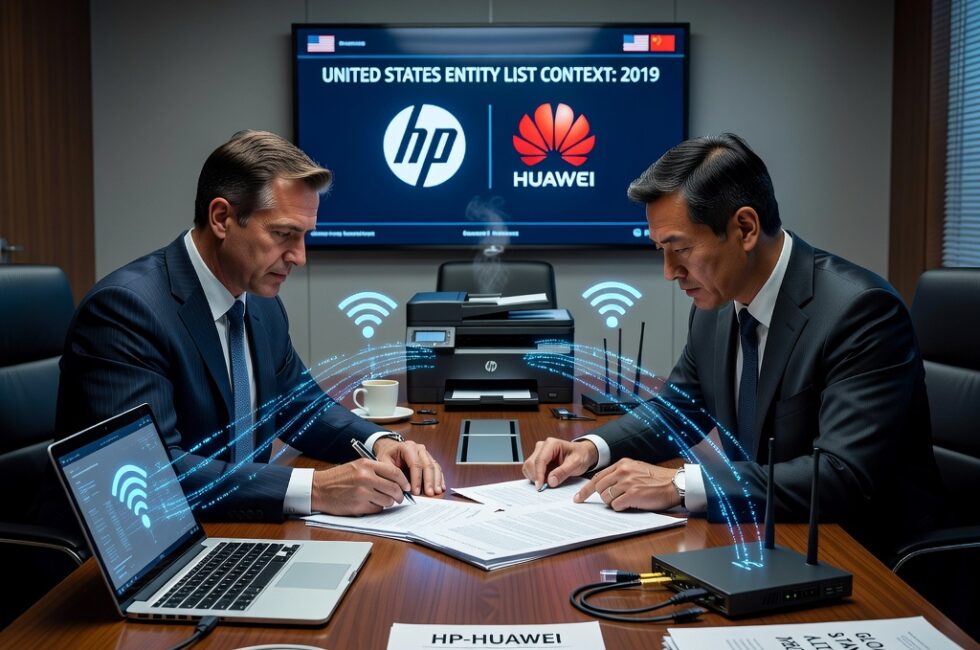
HP has struck a deal with Huawei to license essential Wi-Fi patents, even though Huawei has sat on the US government blacklist since 2019. That is the whole headline, and it is as sideways as it sounds.
If you own an HP laptop, printer, or anything else with Wi-Fi in it, this is the kind of back-room patent business that already lives inside your gear. You never see it on the box. You still pay for it.
What essential Wi-Fi patents actually are
Wi-Fi is not one company’s toy. It is a standard. A pile of companies put patented technology into the recipe, and then anyone who builds a chip, a laptop, a printer, or a router that talks Wi-Fi has to follow that recipe.
Those patents are called standard-essential patents. If you implement the standard, you use the patents. There is no clever workaround that still gives you real Wi-Fi. The companies that own those patents are supposed to license them on fair, reasonable, and non-discriminatory terms. That is the bargain for getting your tech written into the standard in the first place.
Huawei holds a stack of those Wi-Fi patents. HP builds PCs, printers, and other products that use Wi-Fi. So HP needs a license if it does not want to get sued or jammed up in court. That part is normal. The Huawei part is what makes people spit out their coffee.
Blacklisted does not mean what most people think
Huawei went on the US Entity List in 2019. For regular folks, that sounded like the United States was done doing business with Huawei. Period. In practice, the Entity List is an export-control tool. It mainly restricts US companies from selling certain technology, software, and parts to Huawei without a special license from the Commerce Department.
Paying Huawei for a patent license is a different machine. You are not shipping chips or software into Huawei’s factories. You are agreeing to royalties so you can keep using wireless technology that is already baked into global standards. The blacklist was never a total freeze on every dollar that might flow Huawei’s way.
That gap is not some new trick a lawyer cooked up last week. It is how the system was built. Sanctions and patent law do not line up cleanly. If that bothers you, you are not wrong. It should.
Why HP would still sit down with Huawei
HP is not doing this for fun. If Huawei’s Wi-Fi patents are truly essential, HP’s products already use them. Skip the license and you invite lawsuits, injunctions, and a mess in every country where Huawei can haul you into court. HP sells everywhere. China is one of those places. Europe is another.
Huawei, cut off from a lot of US technology, has leaned harder on its patent portfolio as a business. Licensing is one of the few remaining ways it still collects money from Western companies that cannot, or will not, buy its gear. HP gets to keep shipping Wi-Fi products without a legal cloud hanging over them. Huawei gets paid. The customer never gets a vote.
What this means for your stuff
Your HP laptop is not about to start phoning home to Shenzhen because of a patent license. A patent deal is paperwork and royalties, not a backdoor. Do not let anyone sell you that panic.
What it does mean is simpler, and more annoying:
- The Wi-Fi in everyday American products still depends on patents owned by a company Washington spent years telling you was off limits.
- Royalty costs do not vanish. They get folded into PCs, printers, and networking gear, same as every other patent tax you never see on the sticker.
- The US can blacklist a company for national security and still leave a path for that company to collect licensing fees from US firms. Those two policies can run at the same time.
- If you care about who actually controls the standards inside your devices, this is a reminder that Wi-Fi is a global pile of patents, not a homemade radio.
I have been around radios long enough to know that standards only work when everyone can implement them. That is the point of Wi-Fi. It is also why a blacklisted company can still sit at the patent table. The airwaves do not read the Entity List.
The part that should tick you off
Normal people got a simple story in 2019. Huawei is out. Security risk. Do not buy their stuff. Fair enough, as far as it went. Then the same government leaves patent licensing in a gray zone, and a major American PC maker signs a deal anyway because the lawyers say it has to.
That is not HP being sneaky. That is the system not matching the speech. If the patents are essential, you either let companies license them or you blow up Wi-Fi compatibility. Nobody in Washington has been willing to pick that fight out loud.
So HP did the practical thing. They cut a deal, kept the products shipping, and left you to find out from a headline. Follow the money. The patents always get paid, even when the politics say otherwise.
Primary Source: https://www.techspot.com/news/113661-hp-strikes-deal-blacklisted-huawei-license-essential-wi.html