
Category: Hacks and Exploits

  • cPanel Flaw Lets One Hosting Customer Take Root Control of the Whole Server

    cPanel Flaw Lets One Hosting Customer Take Root Control of the Whole Server

    cPanel patched a critical flaw, CVE-2026-65643, that could let one authenticated hosting customer with domain controls execute code as root and take over an entire server.

    That is not a little website glitch. Root means the keys to the whole machine. On shared hosting, that machine is also running your site, your email, your customer database, and everyone else parked on the same box.

    What CVE-2026-65643 actually means

    You do not need to be a wizard to follow this. cPanel is the control panel most cheap and mid-range web hosts still use. You log in, you manage domains, you upload files, you click around. The catch is that a lot of customers share one physical server.

    This bug sits in that setup. An account that already has domain controls, meaning a normal paying customer, not some outsider on the open internet, could run code as root. Once you are root, the walls between customers are gone. You can read other people’s files, grab databases, mess with mail, and plant whatever you want.

    cPanel issued a patch. That is the good news. A patch only helps if your host actually installed it.

    Why shared hosting makes this a bigger problem

    Big outfits with dedicated servers have one tenant: themselves. Shared hosting is different. Your bakery site, a random blog, and a sketchy landing page can all sit on the same hardware. You never picked your neighbors. You also never got a vote on whether they know how to keep a password.

    If one of those neighbors is sloppy, or hostile, this kind of hole turns their cPanel login into a master key. That is the part that pisses me off. Regular folks pay a host to keep this stuff from happening. Then the software that runs the building has a door that leads straight to the basement.

    Authenticated here is the word that matters. This is not a random stranger knocking from outside. It is someone who already has an account and domain controls on that server. On shared hosting, that describes half the building.

    What you should do this week

    Do not wait for a polite email that may never come. Hosts are uneven about this. Some patch fast. Some sit on it.

    • Ask your host, in writing, whether they have applied the cPanel patch for CVE-2026-65643.
    • If you run your own cPanel server, update it now. Do not put it on next week’s list.
    • After the patch is in, change the important passwords: cPanel, FTP, databases, and your site admin login.
    • Pull a fresh backup you actually control, not just the copy sitting on the same server.
    • If the host cannot tell you they patched it, that is your answer. Start looking at moving.

    You are not being paranoid. You are treating a shared machine like a shared machine. One customer should never be able to own the whole building. That is not a feature. That is a failure.

    Keep your own data under your own control as much as you can. The host will talk about uptime. You should be talking about who else has the keys.

    Primary Source: https://thehackernews.com/2026/08/critical-cpanel-flaw-could-let-one.html
  • Russian University Leak Shows How GRU Trains the Hackers Behind APT28 and Sandworm

    Russian University Leak Shows How GRU Trains the Hackers Behind APT28 and Sandworm

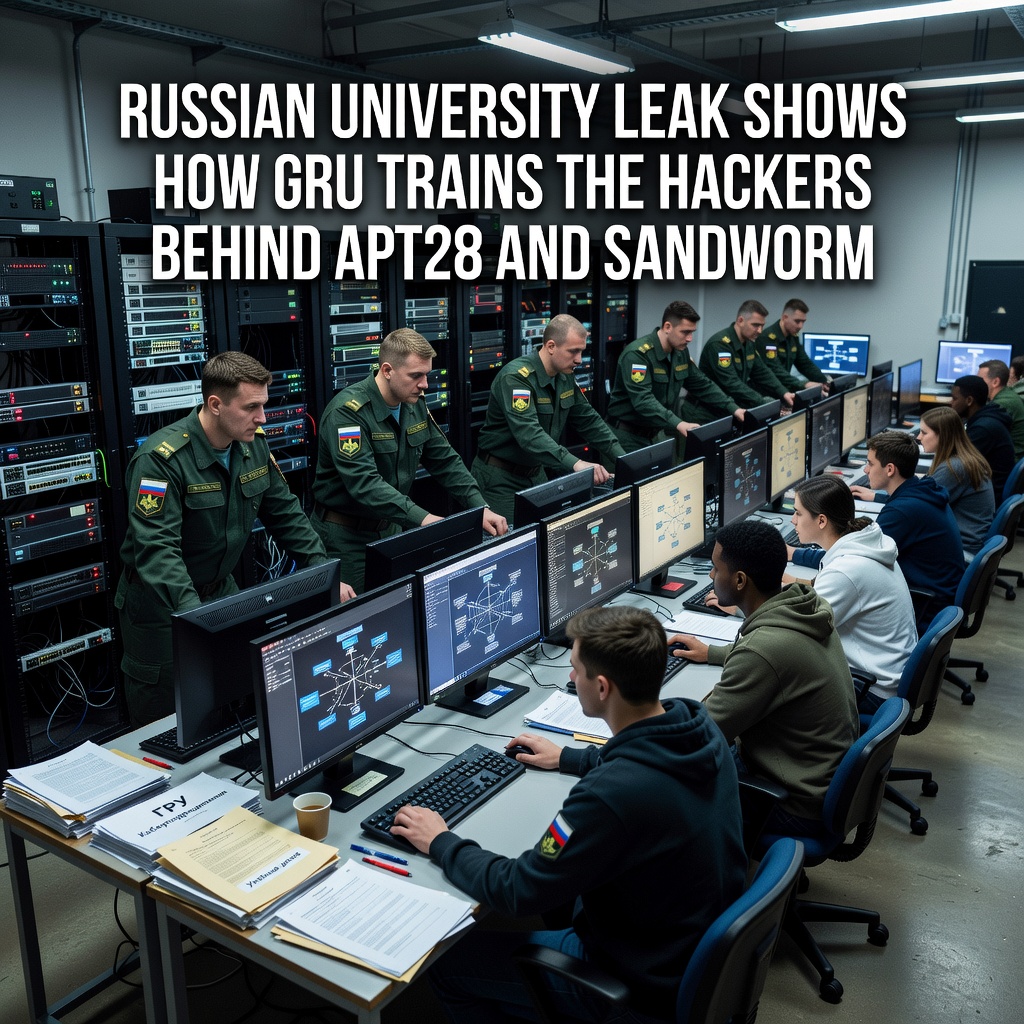
    Leaked records from a Russian university just put hard documentation behind a military cyber training program tied to GRU units APT28 and Sandworm. That is the story. Russia has been using school as a feeder system for state hackers, and the paperwork got out.

    If you are not in cybersecurity for a living, here is why you should still care. APT28 and Sandworm are not brand names on a slide deck. They are GRU crews, Russia’s military intelligence, and they have spent years going after governments, companies, and the kind of infrastructure regular people actually use.

    What the university records point to

    A report published August 28, 2026 describes leaked university records that reveal a Russian military cyber training program linked to those GRU units. This is not a tale about a single gifted kid with a laptop. It is a pipeline. Classroom to unit. Training to operations.

    I am not going to dress it up with details the report does not give you. No fake headcounts. No invented course names. The claim that matters is the structure. A university. Military intelligence. Two of the best known GRU hacking units on the far side of that process.

    APT28 and Sandworm in regular-people terms

    APT28 is the GRU group a lot of folks call Fancy Bear. Their reputation is stolen mail, targeted phishing, and long political and military collection jobs. Sandworm is the GRU unit tied to destructive work, including hits on power systems and the NotPetya outbreak that wrecked companies that had nothing to do with the original fight.

    One side steals. The other side breaks. Same service, different jobs. When a school is feeding that service, you are looking at a factory, not a fluke.

    Why the pipeline is the real story

    Tools are cheap. People who can follow orders and not burn the operation are not. A university gives the GRU classrooms, labs, a way to pick talent, and a civilian wrapper that looks like ordinary education until someone leaks the records.

    That is the part that should make you sit up. Burn one operator and the next class is already enrolled. This is how a system keeps working after the headlines move on.

    • Training is ongoing, not a one-time recruiting binge.
    • A school setting is easier to hide in plain sight than a named military shed.
    • Graduates can be tasked against governments, vendors, or anyone sitting on a useful network.
    • The supply of operators does not end because one campaign got named in a report.

    What you can actually do with this

    You are not going to shut down a GRU school from your kitchen table. You can stop treating state hacking like lightning. Lightning is random. This is organized. Small businesses, clinics, towns, and suppliers get hit because they are softer than a ministry and still connected to something worth taking.

    • Finish your patches. Unfixed software is still the open window.
    • Turn on multi-factor authentication on email, banking, and admin logins.
    • Keep backups that are offline or otherwise out of reach, and test that they restore.
    • Treat unexpected attachments and fake login pages as hostile. APT28 built a career on that mistake.
    • If you run a shop, write down who you call when systems die. Do it before you need it.

    I look at life as systems that either work or they do not. Theirs works. Ours only works if we do the boring defensive stuff and stop hoping we are too small to matter. You are not too small. You are just next to someone who is not.

    Check the backups. Then check them again.

    Primary Source: https://cybersecuritynews.com/russian-university-leak/

  • TeamViewer Patched Flaws That Let Authenticated Attackers Run Code on Your PC

    TeamViewer Patched Flaws That Let Authenticated Attackers Run Code on Your PC

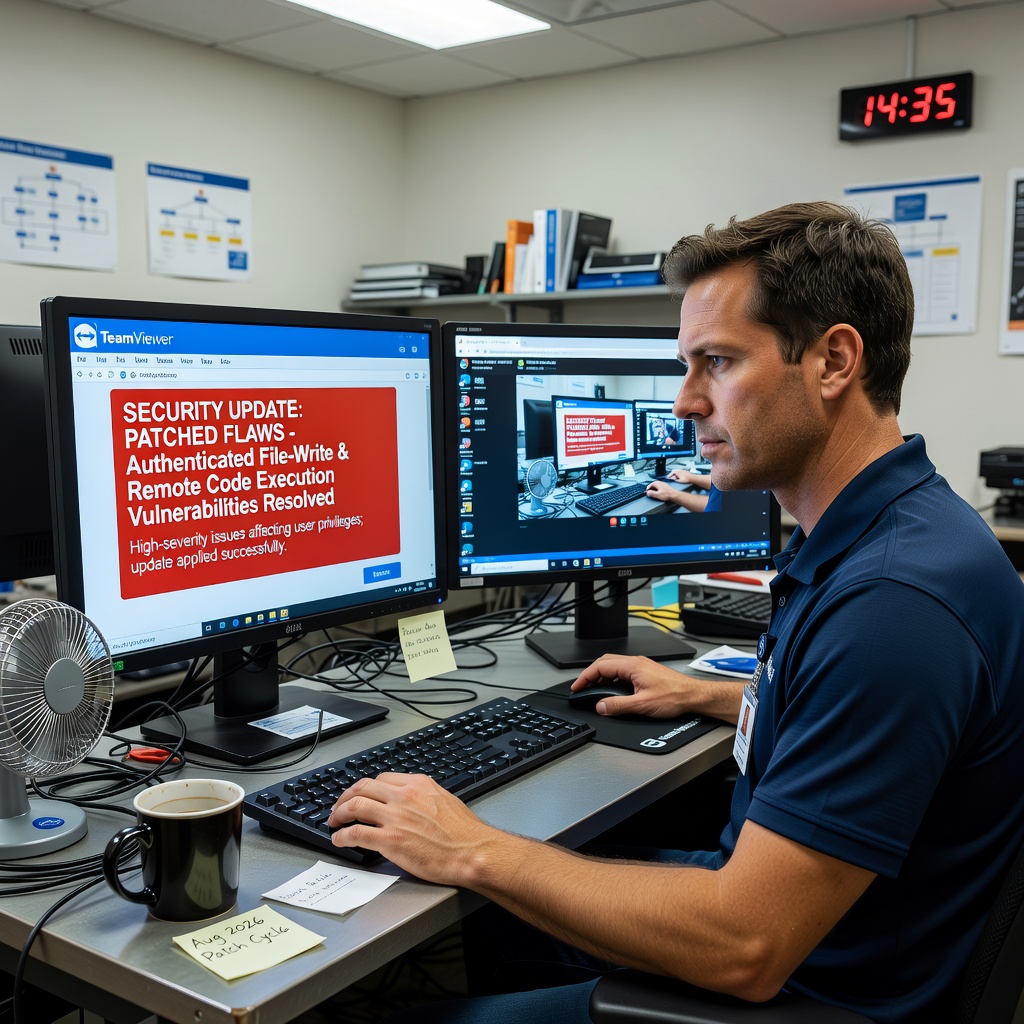
    TeamViewer patched multiple vulnerabilities, including a high-severity flaw that allowed authenticated attackers to write files and execute code with user privileges. If you keep TeamViewer on a work PC, a shop computer, or the laptop you use to help family, this is the kind of hole you close now, not next month.

    Remote code execution is the label. In real life it means someone who already has a way into TeamViewer can drop files on the machine and run their own programs as you. That is not a theoretical problem for a corporate security team. That is a problem for every regular person who leaves remote access running because it is convenient.

    What this TeamViewer flaw actually allowed

    The high-severity issue is simple once you strip the jargon. An authenticated attacker could write files and execute code with user privileges. They needed to be logged in or otherwise recognized by TeamViewer first. That is the limit, and it is not much of a comfort.

    A lot of real trouble starts with a password that leaked, a session that stayed open, or an old vendor account nobody revoked. Once that happens, a bug like this does the heavy lifting. Write a file. Run code. Same rights as the person who uses that computer every day.

    Why remote access software is a fat target

    TeamViewer lives on machines people stop thinking about. The after-hours support laptop. The front counter PC a vendor can still jump on. The home computer a relative uses to fix a printer. Those installs often run as a real user, sometimes with more rights than they should, and they stay connected because nobody wants to be locked out when something breaks.

    Put a file-write and code-execution bug on that kind of tool and you do not need a genius on the other end. You need one unpatched copy and one set of credentials that should not still work. From there it is malware, stolen files, or a hop onto the rest of the network.

    What you should do if you use TeamViewer

    Do the boring work. That is how normal people stay out of trouble.

    • Update TeamViewer on every device that has it. Work machines, home PCs, anything used for remote help.
    • Check who can still connect. Old contractors, old employees, vendor logins you never cut off.
    • Turn off unattended access if you do not truly need it sitting there around the clock.
    • Use a strong, unique password on the account. Do not recycle the same one you use everywhere else.

    I have watched too many small shops and households get burned because the tool that made life easier also left a door open. Vendors will ship a patch. Your job is to put it on the machine.

    This is not complicated. Patch the software. Kill the dead accounts. Keep control of who can sit at your keyboard from somewhere else.

    Primary Source: https://cybersecuritynews.com/multiple-teamviewer-vulnerability/

  • Ring’s New Encryption Could Keep Your Doorbell Video Away From Police

    Ring’s New Encryption Could Keep Your Doorbell Video Away From Police

    Amazon’s Ring is rolling out a new encryption system for its video doorbells and cameras that could limit what footage the company can hand over to police.

    If you have one of these things on your porch, that is not a small change. For a long time, Ring kept a copy of your video on its servers. When law enforcement asked, Ring could open that copy and pass it along. The new setup is meant to take that key out of Amazon’s hands.

    How the new Ring encryption works

    This is end-to-end encryption, in plain English. Your camera locks the video before it ever leaves your house. The keys live with you, on your devices, not in some Amazon building. Ring still stores the file in the cloud, but it is a locked box they cannot open.

    If they cannot open it, they cannot give police the pictures inside. Police can still come to you with a warrant. They just cannot quietly pull your porch cam from corporate headquarters without you in the loop.

    Why this fight exists in the first place

    Ring did not get here because Amazon suddenly found religion on privacy. They got here because people got mad.

    For years Ring made it easy for police departments to tap neighborhood cameras. The Neighbors app turned your block into a crowd-sourced watch list. Departments asked users for clips. Sometimes they got them without much fuss. A lot of regular folks bought a doorbell to stop package theft and never agreed to become unpaid surveillance contractors.

    That always bugged me. You should control the camera you paid for. Your front step is not a police evidence locker unless a judge says so and you are the one handing it over.

    The limits they hope you skip past

    The headline says could limit what Ring hands over. That word is doing real work. Read it twice.

    • Metadata is still on the table. Ring can still know when your doorbell rang, when motion fired, and which account owns the device.
    • If the extra encryption is optional, most people will never turn it on. Defaults beat good intentions every time.
    • Lose your phone, forget a passphrase, or botch account recovery and you may lock yourself out of your own recordings.
    • Cloud tricks like some AI alerts, easy clip sharing, or professional monitoring can get weaker or go away when the company cannot see the video.
    • Anyone you already shared a clip with still has a copy. Encryption does not unsend a text.
    • Law enforcement can still get the video from you, a neighbor, or a camera across the street that never turned this on.

    Companies have also been known to water this stuff down when cops and politicians start yelling about going dark. Do not tattoo this press release on your arm.

    What you should do if you own a Ring

    Do not wait for Amazon to protect you. They will protect Amazon. Open the app and look for yourself.

    • See if the new encryption is available on your doorbell or cameras and turn it on if you want that lock.
    • Write down how recovery works before you flip the switch. A lock with no spare key is a brick.
    • Stop casually sharing clips in ways that create extra copies outside the encrypted system.
    • If you want zero cloud in the middle, look at cameras that record to an SD card or a box in your closet. Old school still works.

    Control over your own video should be the default, not a setting buried under three menus. Until it is, you have to flip the switch. That is the job. Nobody else is going to do it for you.

    Primary Source: https://www.techspot.com/news/113636-ring-new-encryption-limits-what-can-give-police.html

  • ShinyHunters Dumps 12.9 Million Carhartt Accounts and Regular Shoppers Pay the Price

    ShinyHunters Dumps 12.9 Million Carhartt Accounts and Regular Shoppers Pay the Price

    The ShinyHunters extortion group has published sensitive data from nearly 13 million accounts stolen from clothing retailer Carhartt earlier this month. Breach notification service Have I Been Pwned put the count at 12.9 million accounts.

    If you wear their jackets to the job site, this one is about you. Carhartt is not a Silicon Valley app. It is work clothes. The people in this dump are contractors, farmers, mill hands, and anybody who needed gear that would survive a Maine winter.

    What Have I Been Pwned flagged in the Carhartt leak

    Have I Been Pwned is the service regular people use to see if an email address showed up in a known breach. They are the ones confirming this dump and attaching the 12.9 million figure to it.

    ShinyHunters is an extortion group. They steal large piles of customer records and publish them. That is what happened here. The data came from Carhartt, a major clothing retailer in the United States, and it is now out.

    Public reporting calls it sensitive data tied to those 12.9 million accounts. That is already enough. A retailer account is a live list of real customers at a brand people trust.

    Why a workwear brand this size is a problem

    When 12.9 million shopper accounts go public, scammers get a fresh list. The next move is almost always the same. You get a fake Carhartt email about a password reset, a package problem, or a refund. They already know you shop there, so the bait looks right.

    That is how regular people lose email and bank logins. Not because they are dumb. Because the company lost the list, and somebody used it to sound official.

    It pisses me off every time. You paid for a coat. You did not sign up to have your account tossed on the internet because a crew named ShinyHunters wanted a payday.

    What to do if you have a Carhartt account

    Do the boring things that actually work. Do them this week, not after the phishing mail lands.

    • Check Have I Been Pwned with the email you use at Carhartt and any other address that might be on the account.
    • Change the password on your Carhartt account. Make it unique. If that password ever lived anywhere else, change those logins too.
    • Turn on two-factor authentication anywhere Carhartt or your email provider offers it.
    • Treat every Carhartt email, text, and order problem message as hostile until you log in by typing the real site yourself.
    • Watch for new account signups that use your email. Scammers love a known customer list.

    You cannot pull this data back. You can stop the second hit, which is someone walking into your email or your bank with a story that sounds like it came from the store you already trust.

    Do not wait on a company letter. The data is already published. Lock the doors on your own accounts before somebody else tries the handle.

    Primary Source: https://www.bleepingcomputer.com/news/security/carhartt-data-breach-exposes-information-of-129-million-accounts/

  • DOJ and FBI Seize QScan and QTRouter, China-Sponsored Hacking Platforms Targeting U.S. Infrastructure

    DOJ and FBI Seize QScan and QTRouter, China-Sponsored Hacking Platforms Targeting U.S. Infrastructure

    The Justice Department and FBI announced court-authorized domain seizures of two complementary hacking platforms known as QScan and QTRouter. Those platforms were operated and used by China state-sponsored hackers to target U.S. critical infrastructure and other sensitive networks.

    This is not some abstract cyber story. When a foreign government is poking around the systems that keep the lights on, the water running, and the hospitals working, regular people are the ones who eat the damage if those systems go down.

    What the government actually seized

    On August 26, 2026, the Justice Department and FBI said they took the domains tied to QScan and QTRouter. The point of the move was to deny malicious cyber actors access to those two platforms.

    QScan and QTRouter were described as complementary hacking platforms. In plain English, they were tools that worked together. One piece helps find a way in. The other helps keep traffic moving the way the operators want. The announcement did not publish a full technical teardown. What it did say is that China state-sponsored hackers used them against U.S. critical infrastructure and other sensitive networks.

    Why critical infrastructure is your problem too

    Critical infrastructure is the boring stuff you only notice when it fails. Power. Water. Ports. Hospitals. Communications. A lot of it is run by small and mid-size operators, not giant companies with a war room and a six-figure security budget.

    China-sponsored hacking against that kind of target is not about stealing a credit card number. It is about access, persistence, and leverage. If they can sit inside those networks, they can cause real-world pain later. That is the part that should make you sit up.

    What a court-authorized domain seizure does

    A court-authorized domain seizure means the government, with a judge’s sign-off, takes control of the web addresses those platforms used. When the domains go dark or get redirected, the operators lose a control channel. The tools stop talking to home base the way they used to.

    It is a disruption, not a miracle. Serious state-sponsored crews rebuild. They move to new infrastructure. They always do. Taking the platforms offline still matters. It burns their time, their access, and some of the work they already put in. I will take that every day of the week.

    What this means if you run a small shop or a local system

    You do not need to be a power company to care. A lot of sensitive networks sit next to critical infrastructure. Vendors. Contractors. Local IT shops. Municipal systems. Small businesses that plug into bigger ones.

    • Assume you are in the blast radius if you connect to utilities, healthcare, government, or industrial customers.
    • Patch internet-facing gear. Routers, VPNs, and remote access boxes are still the usual front door.
    • Turn on logging and actually look at it. Quiet, persistent access is the whole game here.
    • Do not leave default credentials on anything that can reach the internet.
    • If a vendor or a free tool wants broad network access, treat that like handing someone the keys to the shop.

    Foreign governments play this game at a scale most people never see. The Justice Department and FBI just yanked two of the platforms off the table. That is good work. It does not mean you get to go back to sleep.

    Keep control of your own systems. Update what you run. And do not wait for the next press release to tell you the barn door was open.

    Primary Source: https://www.justice.gov/opa/pr/justice-department-and-fbi-seize-platforms-operated-and-used-china-state-sponsored-hackers

  • Xbox CEO Says You Love Discs – Then Goes Quiet on Helix

    Xbox CEO Says You Love Discs – Then Goes Quiet on Helix

    Xbox CEO Asha Sharma told the BBC she knows players love physical media. She stopped short of confirming that the next-gen Xbox Helix console will keep disc-based games for the long haul.

    That is the news. A friendly line about discs. Then nothing on the machine that actually matters next.

    What Sharma said to the BBC

    Sharma spoke with the BBC about Xbox Helix. She said, “I know players love physical media.” She did not commit Xbox to discs beyond the current generation.

    That quote is doing a lot of work. It sounds like support. It is not a product promise. Windows Central noted she would not comment on next-gen disc plans, and framed the interview against PlayStation’s disc backlash.

    PlayStation already walked into this buzzsaw

    Sony has been catching heat from people who still want a disc they can hold, sell, and play without asking a server for permission. Xbox is watching that fight and saying almost nothing about Helix.

    If Helix was locked in with a disc drive, this was the cleanest opening in the world to say so. Asha Sharma did not take it. Console bosses do not stay quiet by accident.

    Why regular players should care

    A disc is still the simplest way to own a game. Digital storefronts can pull a title, rewrite a license, or go dark when the company moves on. The plastic on your shelf does not care about their earnings call.

    Discs cost Microsoft money. Drives add bulk and price. Downloads look cleaner on a spreadsheet. Game Pass already got a lot of folks used to renting instead of owning. Helix is where they decide if that becomes the only door left.

    Xbox faces a hard choice. Copy the all-digital push and hope people shrug, or keep physical media and eat the cost. The BBC interview does not sound like a company ready to fight for discs. It sounds like a company that does not want the blowback yet.

    What to do if you still buy games to own

    • Do not assume Helix will play the discs you already own.
    • If ownership matters, keep buying physical on the current Xbox while that option is still on the shelf.
    • Watch for an all-digital Helix model first. That is usually how they test the water.
    • A “we hear you” quote is not a spec sheet. Wait for hardware, not a compliment.

    I have been around long enough to remember when you bought software and it was yours. These companies would rather you subscribe forever. Physical media is one of the last bits of control regular people still have in gaming. When a CEO says she knows you love it and then will not promise it, believe the pause, not the compliment.

    Primary Source: https://www.windowscentral.com/gaming/xbox/ceo-asha-sharma-on-discs-for-xbox-gamers-i-know-players-love-physical-media-but-doesnt-comment-on-next-gen-plans

  • Boston Scientific Posted a Cyber Update. Patients Still Do Not Have Straight Answers.

    Boston Scientific Posted a Cyber Update. Patients Still Do Not Have Straight Answers.

    Boston Scientific put up an official page titled “Update on recent cybersecurity incident.” That is the company telling the public something hit their systems. The page description says almost nothing. “Learn more about the recent incident.” That is the whole public teaser.

    When a company that size, in that line of work, posts a notice like this, regular people deserve a plain English read on what it actually means. Not a fog machine.

    Who Boston Scientific is in the real world

    This is not some random software shop. Boston Scientific makes gear that ends up inside hospitals and inside people. Their own site lists products across interventional cardiology, structural heart valves, electrophysiology, urology, gastroenterology, pain management, pulmonology, and a long list of other specialties.

    They sell to doctors. They talk to patients and caregivers. They operate in the United States, Europe, China, Japan, India, and a pile of countries in Latin America. If you have had a stent, a scope procedure, a heart valve job, or certain implants, there is a decent chance their name has been in the room.

    What the company is actually saying

    The official update acknowledges a recent cybersecurity incident. That is the fact on the table. The public-facing description does not name a date, a system, a product line, or whether anyone’s personal information walked out the door.

    That thin language is standard big-company behavior. It is also why people get left guessing. I am not going to fill in the blanks with rumors. If they did not put a number, a date, or a named product in the update, I am not going to invent one for them.

    Why a medical device company getting hit is different

    A retailer leak is ugly. A medical manufacturer incident sits in a different category. These companies sit on a mix of things regular folks never think about until something breaks:

    • Hospital ordering and supply systems
    • Product serial numbers and implant records
    • Doctor and clinic contact lists
    • Employee files
    • Patient support program data, if they run those programs

    That does not automatically mean your pacemaker or valve got remotely tampered with. Corporate email and factory planning systems are not the same thing as the firmware in a device sitting in someone’s chest. Mixing those two up is how panic spreads. Still, when the company that builds the hardware has a security problem, hospitals, clinics, and patients all have a right to a clear answer.

    If you have Boston Scientific hardware

    Do not yank anything. Do not skip a follow-up. Your implant or hospital device is not a laptop you reboot after a phishing email.

    What you should do is simpler:

    • Keep your scheduled appointments and remote checks if you have them.
    • Call your clinic if you notice a device alert you do not recognize. That is normal advice anyway.
    • Watch your mail and email for a formal notice from the company. If they determine personal information was involved, that is how most people find out.
    • Treat unexpected messages that claim to be Boston Scientific with suspicion. After a public incident, scammers love to impersonate the company and ask you to “verify” something.

    If you work in a hospital or a small clinic

    This is the part that hits daily operations. A cyber incident at a major supplier can slow ordering, delay shipments, or knock out the portals people use to check stock and register products. Have a backup way to reach your Boston Scientific rep that does not depend on a single website login. Write down the phone number. Old school still works.

    If your purchasing or inventory system talks to theirs, tell your IT people. They should be watching for odd login prompts and fake invoices. That is where the second wave of damage usually shows up. Not always in the first breach. In the phishing that follows it.

    What regular people should take from this

    Big medical companies will keep getting hit. The systems are large, the data is valuable, and the public updates are usually written by lawyers. You cannot control their network. You can control how you react.

    • Believe the incident happened. They would not post the page if it did not.
    • Do not assume your implant was hacked. That is a different problem than a corporate network event.
    • Do assume scammers will use the news. Hang up and call a number you already trust.
    • If a breach letter arrives, read it. Credit monitoring is not magic, but ignoring the letter is worse.
    • Ask your clinic how they would reach you if a device advisory ever did come out. That conversation is worth having even without a cyber story in the news.

    I get tired of companies that make life-and-death products talking like they spilled coffee on a laptop. Say what systems were involved. Say whether patient or employee data is in play. Say it in English. Until they do, treat the official update as a warning light, not a full report.

    Primary Source: https://news.bostonscientific.com/update-on-recent-cybersecurity-incident

  • Boston Scientific Cybersecurity Incident Update Gives Patients Almost Nothing to Go On

    Boston Scientific Cybersecurity Incident Update Gives Patients Almost Nothing to Go On

    Boston Scientific posted an official update on a recent cybersecurity incident. That is the public headline. The company, a major maker of medical devices used in hospitals and in people’s bodies, put the notice on its news site and described it as a chance to “learn more about the recent incident.”

    If you or someone you love has a Boston Scientific implant, or if you work in a clinic that runs their gear, that kind of language is not enough. An update that does not say what was hit, when it started, or whether your data or a device was in play is not an update. It is a placeholder.

    Who Boston Scientific actually is

    This is not a random software vendor. Boston Scientific builds tools used in interventional cardiology, heart failure, electrophysiology, urology, gastroenterology, pain management, structural heart valves, vascular surgery, and a long list of other specialties. Their name is on products that sit in cath labs and, in some cases, inside patients.

    When a company like that says cybersecurity incident, regular people should pay attention. Hospitals depend on their systems. Patients depend on the devices. A vague notice is how big outfits talk when they want credit for being transparent without actually being transparent.

    What their own page actually says

    The public page is titled “Update on recent cybersecurity incident.” The description on that page is “Learn more about the recent incident.” That is the substance they put in front of the public on the notice itself. No date for when the incident started. No count of people or systems affected. No named products. No statement on whether patient information, hospital networks, or device operations were involved.

    I am not going to invent those facts for them. If they did not put the numbers and the scope in the update, I will not pretend they did.

    Why a medical device company incident is different

    A retailer losing loyalty card numbers is bad. A medical technology company having a cybersecurity incident is a different animal. The risk is not just a password reset. It can touch:

    • Patient records and billing data sitting in company or hospital systems
    • Scheduling, ordering, and support tools clinics use every day
    • Trust in devices used for hearts, blood vessels, and other high-stakes care
    • Supply and service disruption if internal systems go down

    None of that means those things happened here. It means those are the questions Boston Scientific owed people the minute they used the word incident.

    The corporate playbook is getting old

    This is the same dance we see after every serious cyber event. A carefully titled page. Soft language. Recent. Update. Learn more. Meanwhile the people who might actually be affected are left to refresh a news page and hope a lawyer or a regulator forces a real disclosure later.

    It pisses me off because the people on the hook are not the executives. They are the patient with a stent or a heart device, the small clinic trying to keep a procedure schedule, and the hospital IT crew that has to guess whether they should isolate a vendor connection.

    What you should do right now

    • If you have a Boston Scientific device, do not panic and do not stop following your doctor’s plan. This notice does not say any implant was remotely attacked.
    • Ask your clinic or hospital whether they use Boston Scientific systems for records, ordering, or device support, and whether they have seen any service disruption.
    • Watch for a real notice from the company or from a regulator that names what data, if any, left the building. A title is not a notice.
    • If you work in a hospital or a small practice, treat this as a vendor-risk flag. Confirm your Boston Scientific connections, backups, and who you call if their portal or support tools go dark.
    • Lock down your own accounts the usual way. Unique passwords. Multi-factor authentication. That advice does not depend on this incident being a data theft.

    Boston Scientific chose to put cybersecurity incident on a public page. Fine. Now finish the job. Tell people what happened, what did not happen, and who needs to do something. Until they do, treat the update as a warning light, not a full report.

    Primary Source: https://news.bostonscientific.com/update-on-recent-cybersecurity-incident