Category: Hacks and Exploits

  • Fake CAPTCHA Scam Tricks Mac Users Into Pasting a Backdoor Into Terminal

    Fake CAPTCHA Scam Tricks Mac Users Into Pasting a Backdoor Into Terminal

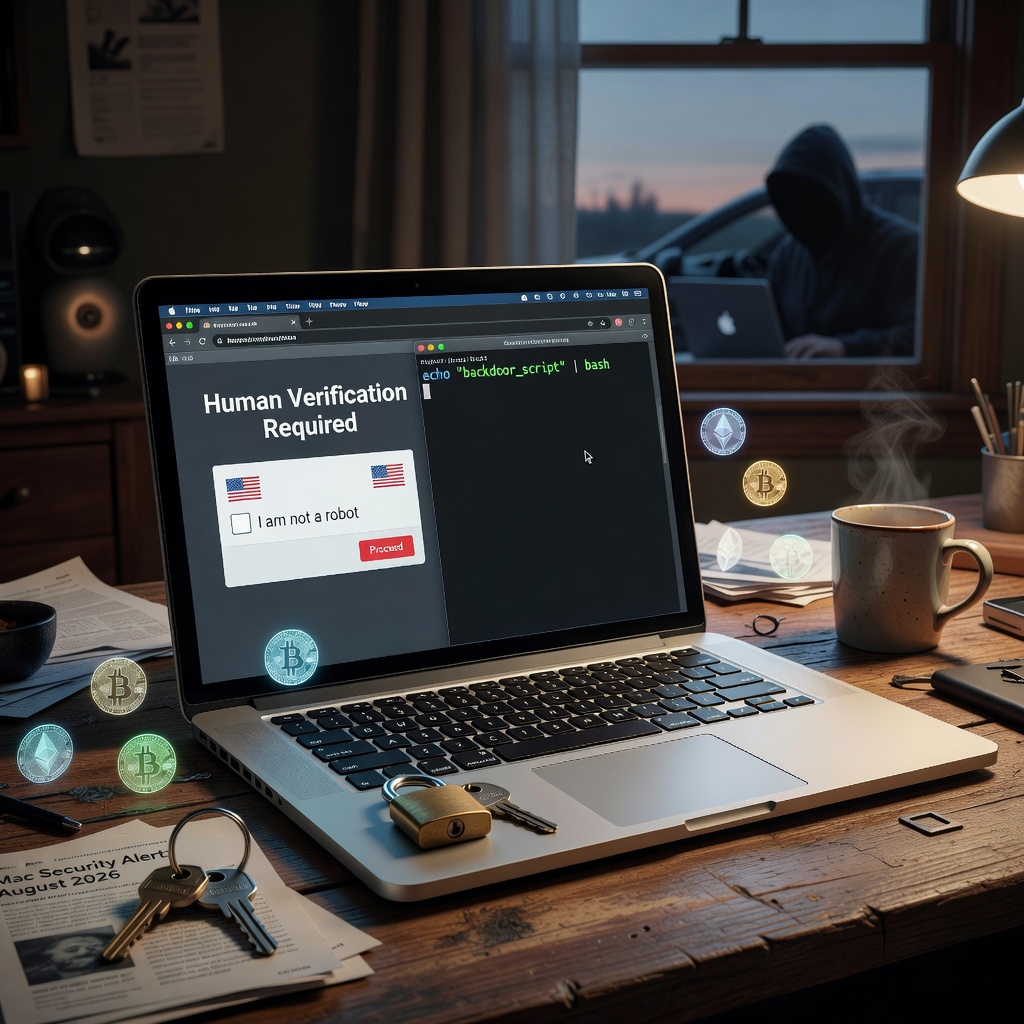
    Cyber Security News reports that fake CAPTCHA pages are tricking Mac users into pasting malicious commands into Terminal. Those commands install a backdoor that steals passwords, gives attackers remote control of the Mac, and mines cryptocurrency on the victim’s machine.

    This is not some exotic hack that punches through Apple’s defenses on its own. It is a con. The page looks official, the user does the last step, and the machine is wide open.

    How the Fake CAPTCHA Trick Works

    You land on a site. A familiar prove-you-are-human box shows up. Instead of a normal checkbox that stays in the browser, the page tells you to copy a command and paste it into Terminal on your Mac.

    That is the whole scam. A real CAPTCHA never asks you to open Terminal. It never asks you to paste anything into a system tool. The second a website tells you to run a command on your own computer, that website is the problem.

    Once the command runs, the backdoor is in. From there the reporting says attackers can steal passwords, control the Mac remotely, and use it to mine crypto.

    Why This Hits Regular Mac Users

    Plenty of folks still walk around thinking a Mac does not get this kind of trouble. That belief is part of the bait. You do not have to download some shady app from a random corner of the internet. You just have to follow instructions on a page that looks like every other security check you have clicked through for years.

    Password theft is the part that should stop you cold. If this thing gets on the machine, it is not only a hot laptop and a high electric bill from crypto mining. It is your logins, your saved credentials, and a stranger who can come back later without asking.

    Remote control means they do not need you to click again. Mining means your power and your hardware are now working for them. Three problems from one paste.

    What You Should Do

    • Never paste a command into Terminal because a website told you to. Not for a CAPTCHA. Not for a verification. Not for a so-called fix.
    • A real CAPTCHA stays in the browser. If a page asks you to open an app, copy a command, or change a system setting, close the tab.
    • If you already pasted something from a CAPTCHA page, pull the Mac off the network, change important passwords from a different device, and get the machine checked before you use it for banking or work.
    • Use a password manager and turn on two-factor authentication so one stolen password is not the key to everything.
    • Keep macOS updated. An update will not stop you from pasting a bad command, but it makes life harder for leftover junk.

    The Rule That Shuts This Down

    Nobody legitimate needs you to run Terminal to prove you are not a robot. That one sentence would have saved every person this scam is built to catch.

    Big sites trained all of us to click through CAPTCHAs without thinking. Criminals noticed. They swapped the checkbox for a command and counted on people doing what they were told. That is not clever engineering. That is using a habit against regular people.

    If a page asks you to prove you are human by handing it the keys to your Mac, you already have your answer. Close it and move on.

    Primary Source: https://cybersecuritynews.com/fake-captcha-tricks-mac-users/

  • TikTok’s $400 Million Kids Privacy Settlement Changes Almost Nothing for Parents

    TikTok’s $400 Million Kids Privacy Settlement Changes Almost Nothing for Parents

    TikTok reached a $400 million settlement with the US Justice Department, ending a 2024 lawsuit that alleged the company violated federal children’s privacy laws.

    The Associated Press reported the deal as the close of that case. Big headline. Big number. For parents trying to keep a phone out of the data-mining business, the result is thinner than the headline makes it sound.

    The 2024 Lawsuit and the $400 Million Check

    In 2024, the Justice Department sued TikTok over federal children’s privacy laws. Those laws exist for a simple reason. Kids are not supposed to be treated like adult users, and companies are not supposed to collect and use their information the same way.

    The lawsuit is now over. TikTok pays $400 million. That is what the settlement does. It ends the case.

    It does not put the app in a time-out. It does not unwind years of data. It does not hand families a refund. It is a government settlement, not a repair job for the people who actually live with this app in the house.

    Why $400 Million Sounds Bigger Than It Is

    Four hundred million dollars is real money in rural Maine. It is not real pain for a global video platform. Settlements like this become a line item. Pay it. Keep the product. Keep the users. Keep collecting.

    That is the part that pisses me off. Regular people get told the system worked because a large number showed up in a headline. The system worked for the lawyers and the press release. Your kid’s data does not come home.

    What This Means If You Have Kids on TikTok

    If the DOJ was right, TikTok crossed a legal line with children. A settlement is not the same thing as a public trial that lays out every practice in plain English. You still have to assume the app wants attention, data, and time. That is the business.

    You are the last line of defense. You always were. This check does not change that.

    • Do not treat the settlement as proof the app is now safe for kids.
    • If a child is under the age the law is built to protect, they should not have an account. Period.
    • Check what is installed on the phones you pay for. You own the device. Act like it.
    • Talk to your kids about what these apps collect. They will not hear it from TikTok.
    • If you want less tracking leaving the house, tighten the settings and tighten the rules at home. The government just cashed a check. It did not parent for you.

    The Pattern You Should Notice

    This is how the privacy game works now. A company gets big. The feds file a case. Years go by. A settlement lands. The product stays in kids’ hands. The next story will look a lot like this one.

    Freedom and control over your own data start at your door, not in a DOJ press release. If you were waiting for Washington to fix the phone in your kid’s pocket, this $400 million deal is your reminder. They will not do it for you.

    Primary Source: https://www.securityweek.com/tiktok-reaches-400-million-settlement-with-us-justice-department-over-childrens-privacy/

  • Uber Faces Nearly $1B Fine for Letting Software Suspend Drivers

    Uber Faces Nearly $1B Fine for Letting Software Suspend Drivers

    The Dutch Data Protection Authority is fining Uber €825 million over automated driver suspensions. That is nearly $1 billion. It is also the second largest penalty issued under Europe’s GDPR.

    Here is why this is not just another big-tech slap on the wrist. Uber used automation to suspend drivers. Those drivers lose work the minute the account goes dark. Europe’s privacy regulator just put a price on that kind of system, and the number is large enough that even people who never open the Uber app should pay attention.

    What the Dutch fine actually covers

    Strip away the press language and you get a short list of facts.

    • The regulator is the Dutch Data Protection Authority.
    • The company is Uber.
    • The amount is €825 million, framed as nearly $1 billion.
    • It is the second largest penalty issued under Europe’s GDPR.
    • The issue is automated driver suspensions.

    That last item is the whole ballgame. This is not a story about a banner on a website. This is a story about software making a call that can zero out someone’s week.

    Why an automated suspension hits so hard

    GDPR is the European data protection law most Americans only meet as a cookie popup. The serious part of that law is about personal data and decisions. A rideshare account is stuffed with personal data. Location. Ratings. Trip history. Identity documents. When that pile of data gets fed into a system that can lock a driver out, the driver is not a user anymore. The driver is the product of a decision they cannot see and often cannot fight.

    I fix systems for a living. A system that can take your livelihood and hand you a help article is not a support process. It is a wall. Regular people on the other side of that wall are the ones I worry about. They are not in the boardroom. They are trying to make a car payment.

    This does not stay in the Netherlands

    Uber is a global platform. The same style of automated enforcement shows up anywhere the app runs, including here in the United States. Europe happens to have a regulator willing to swing a very large stick. We do not have a GDPR clone with that kind of punch. So a fine this size is one of the few outside pressures that can force a global company to rethink how the machine treats the people who keep it fed.

    Will that rewrite the driver app in Portland, Maine tomorrow? Probably not. Will the lawyers and product teams suddenly care more about human review, appeal paths, and how long data sits in a punishment model? That is how these things usually travel.

    What you should actually do with this

    If you drive, deliver, or hustle on a platform, treat the app like a landlord that can change the locks overnight.

    • Keep your own records. Screenshots of ratings, trip problems, and support chats. When the account dies, the company still has the database. You have whatever you saved.
    • Do not trust a pretty appeal button. Ask whether a person is looking at your case. If you cannot get a name or a ticket that goes somewhere, you are still talking to the machine.
    • If you run a small business and you automate anything that can cut off a contractor, a customer, or an employee, sit up. Europe just showed what it thinks that is worth. You may not be Uber, but you can still build a cruel system by accident.
    • Passengers should care too. Automated bans and botched enforcement are how good drivers vanish and how bad incentives sneak into the ride you just booked.

    I am not against automation. I build it. I am against a black box that can fire you at midnight and call it efficiency. Europe just sent a bill for that attitude.

    Uber faces this fine. Facing it is not the same as paying it, and companies this size usually fight. Do not wait for the final receipt to get the point. If your paycheck lives inside someone else’s software, you are one automated decision away from being locked out. Act like it.

    Primary Source: https://techcrunch.com/2026/08/23/uber-faces-fine-of-nearly-1b-over-automated-driver-suspensions/

  • AliExpress Hijacks Multipoint Bluetooth Headphones With Hidden Web Audio Fingerprinting

    AliExpress Hijacks Multipoint Bluetooth Headphones With Hidden Web Audio Fingerprinting

    On August 20, 2026, the laserphile blog described a simple, ugly problem. Load the AliExpress homepage in Firefox or Chrome and multipoint Bluetooth headphones stop playing audio from your phone. Close that tab and the phone comes back instantly.

    There is no product video. There is no music player. Muting the tab does not help. Muting Firefox does not help. Muting Windows does not help. The page looks idle, and your headphones still treat the PC as busy.

    That is not broken hardware. That is a shopping site occupying your audio path without asking.

    How multipoint headphones get stolen

    Multipoint Bluetooth is supposed to be convenient. The headphones stay connected to a PC and a phone at the same time. The computer takes priority when it is actually playing something. The phone waits, then takes over when the PC goes quiet.

    The headphones do not care whether you can hear a sound. They care whether the computer has an active audio path. If a webpage keeps that path open, the PC wins. Your phone gets cut off. Music, podcasts, even a call waiting on the phone can die while you stare at a silent storefront.

    No media, two hidden audio engines

    The laserphile writeup checked the obvious places first:

    • No <audio> or <video> elements
    • No calls to play media
    • No Media Session showing playback
    • No media requests hiding in a frame

    Nothing useful showed up. The trouble also did not start the instant the page loaded. It kicked in after the AliExpress homepage sat idle for several seconds.

    So the author stopped looking for a player and started watching the Web Audio API. He wrapped the browser AudioContext constructor and watched what the page created. Two hidden audio contexts appeared. Both went into the running state. Both connected nodes to AudioContext.destination, which is the live speaker path.

    Still no audible sound. Still no media elements. The PC was “playing audio” only because AliExpress built a silent audio graph and left it running.

    Why a store page needs your sound card

    The laserphile post puts a name on it: Web Audio fingerprinting. Sites use the Web Audio API to help identify a browser even when cookies are locked down. You do not press play. You do not get a volume slider. Your machine just gets measured.

    I do not need a white paper to call this what it is. A shopping page is holding your headphones and poking your hardware so it can tell you apart from the next person. Regular folks should not have to reverse engineer a product page just to keep a podcast on their own gear.

    That is the part that pisses me off. The webpage looks idle. Your headphones look broken. The store is the one holding the switch.

    What this means if you use multipoint Bluetooth

    If phone audio randomly dies while a shopping tab is open, do not assume the headphones are junk. Check the browser first.

    • Close the AliExpress tab. In the original report, that restored phone audio right away.
    • Muting the tab, the browser, or Windows will not fix it. Silent Web Audio is not the same thing as a muted video.
    • This showed up in Firefox and Chrome. Other browsers were not tested in the writeup.
    • The grab can wait a few idle seconds, so a page that seemed fine at first can still steal the headphones.
    • Any site that leaves a running AudioContext wired to the destination can pull the same stunt.

    If you live on multipoint headphones the way a lot of us do, treat leftover shopping tabs like an open mic. They can hold the line even when you hear nothing.

    What actually works

    You should not need a debugger to browse a store. Until browsers treat silent Web Audio with the same suspicion they give autoplay video, the practical moves are blunt.

    • Shut the AliExpress tab when you are done looking.
    • Keep shopping sites in a separate browser window or profile if work audio and phone audio share the same headphones.
    • If a site seizes your headphones with no visible media, that is a signal, not a coincidence.
    • Privacy blockers may cut some fingerprinting scripts, but the only fix proven in this case was closing the page.

    Your headphones are not confused. They are doing what the computer told them. AliExpress just never bothered to tell you it was talking.

    Primary Source: https://blog.laserphile.com/2026/08/aliexpress-webpage-keeping-multipoint.html

  • Take-Two Subpoenas Microsoft for Windows Device IDs of Entire Discord Servers Over GTA 6 Leaks

    Take-Two Subpoenas Microsoft for Windows Device IDs of Entire Discord Servers Over GTA 6 Leaks

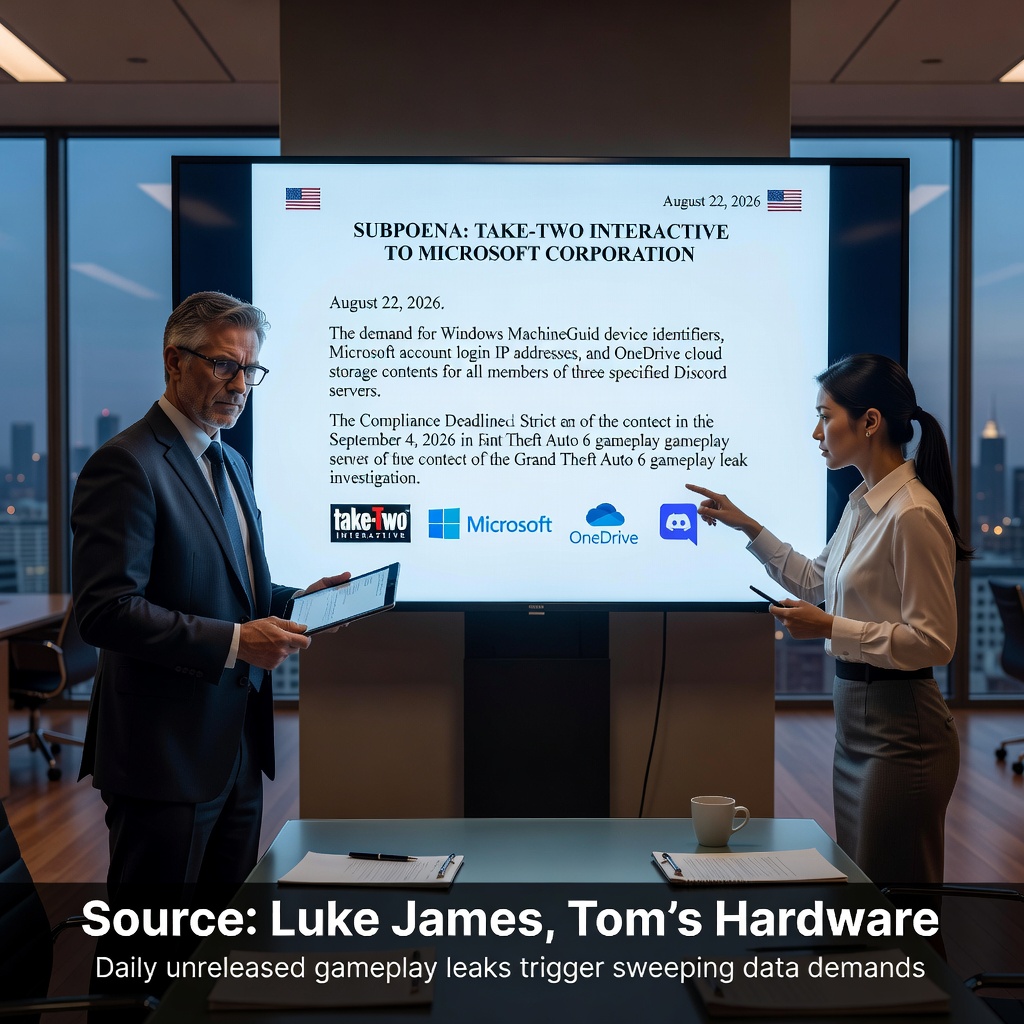
    Take-Two is not just chasing a leaker. According to reporting from Tom’s Hardware, the GTA publisher has subpoenaed Microsoft for Windows device IDs of everyone in three Discord servers after daily GTA 6 gameplay leaks blew a hole in the secrecy around the game. The company wants MachineGuid identifiers, login IPs, and OneDrive contents, and it wants that haul by September 4.

    That is a dragnet, not a pinpoint search. If you were just hanging out in one of those servers talking about a video game, your PC fingerprint and cloud files are now on a corporate shopping list.

    What Take-Two asked Microsoft to hand over

    Tom’s Hardware reports the publisher is not asking for a username and a polite tap on the shoulder. The subpoena targets three buckets of data tied to people in those Discord servers:

    • MachineGuid identifiers – the unique ID Windows stamps on a PC
    • Login IPs – where those Microsoft accounts signed in from
    • OneDrive contents – files sitting in Microsoft’s cloud storage

    The deadline in the report is September 4. The article, published August 22, 2026 by Luke James, frames this as a leak hunt after daily gameplay footage started circulating and shattered the cloud of secrecy around GTA 6.

    What a Windows MachineGuid actually is

    Most people have never heard of MachineGuid, and Microsoft does not put it on a welcome screen. It is a unique identifier Windows assigns to an installation. Think of it as a serial number for that copy of Windows on that machine. It lives in the system, it does not change when you swap a display name, and it is very good at tying activity back to one specific PC.

    Pair that with login IPs and you can start mapping a Discord account to a household, a workplace, or a coffee shop. Add OneDrive contents and you are no longer identifying a machine. You are rummaging through whatever that person stored in Microsoft’s cloud.

    That combination is why this should bother regular people, not just the kid who allegedly ripped gameplay footage. Device IDs plus IPs plus cloud files is how you turn a chatroom full of strangers into a list of real-world machines and the stuff sitting on them.

    Everyone in the server, not just the suspect

    Read that request again. Take-Two wants data on everyone in three Discord servers. Not the one account that posted a clip. Not a short list of mods. The whole room.

    Discord servers are messy. You join because a friend dropped a link. You lurk. You ask if the game is coming to PC. You never upload a frame of anything. Under this kind of subpoena, that does not matter. Presence in the server is enough to put your Windows ID, your IPs, and your OneDrive on the pile.

    This is the part that pisses me off. Big companies love to talk about going after pirates and leakers. Then they write a request wide enough to vacuum up bystanders, and they hand it to another giant that already holds the keys to half the PCs on Earth. Microsoft sits on the identity layer for Windows, the sign-in logs, and the cloud drive. One subpoena turns that stack into a hunting license.

    What this means if you use Discord and Windows

    You do not need to be a GTA 6 fan for this to land. The pattern is simple. A company gets angry about leaks. It finds a chat platform where the files showed up. It asks the operating system vendor for device IDs, IPs, and cloud files for an entire community. If courts keep blessing that shape of request, leak hunts become a standing excuse to fingerprint rooms full of regular users.

    Practical takeaways from this specific mess:

    • Joining a Discord server is not a private act. Your membership can be used to justify a demand for data that lives far outside Discord.
    • A Windows MachineGuid is a durable handle on your PC. It is not the same as a nickname you can change tonight.
    • Login IPs tell a story about where you were, not just who you pretended to be in chat.
    • OneDrive is not a junk drawer when a publisher can ask Microsoft to open it. If you would not want a game company reading a folder, do not park that folder in their potential blast radius.
    • The September 4 deadline in the Tom’s Hardware report is tight. That is how these things move. By the time a story like this hits, the clock is already running.

    I am not shedding tears for whoever is dumping unreleased GTA 6 gameplay. Steal a company’s unfinished work and you should expect them to come looking. What I will not shrug at is a publisher asking Microsoft to tag every Windows machine tied to three entire Discord servers and then peek at OneDrive while they are in there.

    If you want control over your own data, treat this as a reminder. The chat app, the operating system, and the cloud drive are three different companies until a subpoena lines them up. Then they become one pipeline. Regular people sitting in a game server should not have to learn that the hard way.

    Primary Source: https://www.tomshardware.com/video-games/console-gaming/take-two-subpoenas-microsoft-for-windows-device-ids-of-everyone-in-three-discord-servers-in-gta-6-leak-hunt

  • LinkedIn’s AI Slop Button Just Crossed a Million Hits

    LinkedIn’s AI Slop Button Just Crossed a Million Hits

    People have clicked the “Seems like AI slop” button on LinkedIn more than a million times already. That is not a rounding error. That is a crowd of regular users looking at their so-called professional feed and hitting the complaint button.

    If you spend any time on that site, you already know why. The place has turned into a conveyor belt of fake wisdom, fake humility, and fake lessons nobody actually learned. Folks got a button that says the quiet part out loud. They used it. A lot.

    What a million slop clicks actually means

    A button only gets mashed like that when the problem is sitting in your face every morning with your coffee. People are not doing this for sport. They are tired of reading posts that sound like they were written by a committee that never met a customer, never fixed a truck, and never had to make payroll on Friday.

    I have spent more than 30 years helping small businesses and regular folks cut through marketing noise. I can smell this stuff from across the room. The cadence is too smooth. The lesson is too tidy. Nobody talks like that at the shop or at the kitchen table.

    The platform built the mess and then handed you a form

    Here is the part that gets under my skin. The same professional network that made it easy to flood the feed with machine-written posts is now letting you flag the junk. That is like selling cheap paint and then offering a comment card when the barn peels.

    Big platforms love cheap content because cheap content fills the pipe. Your time is the product. When more than a million people take the extra second to say this looks fake, that is not a cute metric. That is a vote of no confidence.

    What this means if you still need LinkedIn for work

    A lot of you do not have the luxury of logging off. Jobs, clients, and hiring still live on that site. So here is the practical read.

    • If a post reads like a speech written by a toaster, it probably is. Scroll on.
    • Do not compete with slop by making more slop. Write like you talk. Short. Specific. About real work.
    • Use the flag if you see the button. A million clicks only matter if people keep telling the system the feed is broken.
    • For your own business, human proof still wins. Real names, real jobs, real results, and a voice that sounds like a person.

    The feed will not fix itself

    Nobody at a giant social network is going to ride in and save your attention span. They will keep the tools that fill the pipe and keep the button that lets you complain about the pipe. That is the system.

    Your move is simple. Stop rewarding empty posts. Write real ones. And if something looks like it came off an assembly line, treat it that way. A million people already did.

    Primary Source: https://www.techspot.com/news/113580-people-have-clicked-like-ai-slop-button-linkedin.html

  • Iran-Linked Hackers Took a UK Power Plant Offline for Four Days

    Iran-Linked Hackers Took a UK Power Plant Offline for Four Days

    A cyberattack attributed to hackers linked to Iran forced a British power plant offline for four consecutive days last month. Officials describe it as the first successful attack of its kind against UK energy infrastructure.

    That is the story as Cyber Security News reported it on August 23, 2026. A plant in the United Kingdom sat dark for four days because someone got into the system and took it offline. Not a glitch. Not weather. A cyberattack.

    What the Report Actually Says

    The public details are thin, and I am going to stay inside them.

    • The outage lasted four consecutive days last month, which puts it in July 2026.
    • The attackers are described as Iran-linked hackers.
    • Officials say this is the first successful attack of its kind on UK energy infrastructure.

    The report does not name the plant. It does not name a specific hacking crew. It does not say how they got in. I will not invent those pieces. That is how people get sold a cleaner story than the facts support.

    Four Days Is Not a Blip

    Four days offline at a power plant is a systems failure with a long tail. Grid operators have to move load. Backup generation costs real money. If that plant served a region, homes and small shops felt it even if the headline never listed their names.

    For years the pitch has been that critical infrastructure is locked down. Air-gapped. Too important to fail. Then officials in the UK say a plant got knocked offline for four days and that it is the first successful hit of its kind. First successful means the wall did not hold.

    Regular People Pay First

    When energy infrastructure goes down, the people who wrote the software and sold the control systems are not the ones sitting in the dark. Regular folks are. Higher rates later. Lost hours at work. A cooler full of spoiled food. A small business that cannot open.

    Nation-state linked groups targeting energy is not a new threat on paper. What is new, if the officials are right, is a successful four-day takedown of a UK plant. Attribution in this business is often messy. The outage is not. Four days is four days.

    What You Can Actually Do With This

    You cannot patch a British power plant from your kitchen. You can stop treating multi-day outages like someone else’s problem.

    • Build a real plan for several days without power. Water, medications, heat or cooling, cash, and a battery or generator you have tested.
    • If you run a shop or a small company, know what four dark days do to payroll, inventory, and customers. Offline records and backup power are not extras anymore.
    • Do not assume critical infrastructure means it is already handled. This report says it was not handled well enough.
    • Watch who gets the cleanup contracts and who gets the blame. That is usually where the money goes after a story like this.

    Big systems fail the same way small ones do. A door left open. A network that should never have been reachable. We do not have those details yet. We have a plant that sat offline for four days and officials calling it a first. Take that seriously.

    Primary Source: https://cybersecuritynews.com/hackers-force-uk-power-plant-offline/

  • US Bank Investigating LockBit Ransomware Claim as Crooks Threaten a September 3 Data Dump

    US Bank Investigating LockBit Ransomware Claim as Crooks Threaten a September 3 Data Dump

    US Bank is investigating a data breach claim from the LockBit ransomware group. LockBit is threatening to publish stolen data on September 3 unless the bank pays.

    That is the story as it stands. A claim. An investigation. A deadline on a major bank that regular people use every day. There is no public confirmation yet that anything was actually stolen.

    What LockBit Claimed and What We Actually Know

    LockBit posted that it hit US Bank and took data. The group set September 3 as the date it says it will leak that data if nobody pays. The report says US Bank is investigating the claim.

    This is the standard ransomware shakedown. Break in, copy files, then use the stolen data as leverage. Pay us or we dump it. Sometimes the claim is real. Sometimes it is a bluff. You cannot tell from the outside, and customers should not have to guess.

    Why a Bank Claim Like This Hits Regular People

    Your bank is supposed to keep your money and your personal information locked down. When a ransomware crew names that bank, you have a right to be angry and a reason to pay attention.

    We do not have a list of what might have been taken. We do not have a count of accounts. Until US Bank finishes looking and tells customers straight, you are flying blind. That is how these outfits take advantage of regular people. The bank investigates. The crooks set a clock. You sit there wondering if your information is about to get shopped around.

    What You Should Do If You Bank With US Bank

    Do not wait for a polished statement. Take a few steps that actually protect you.

    • Watch your US Bank accounts and statements for anything you did not do.
    • Turn on transaction alerts if they are not already on.
    • Consider a credit freeze at the major bureaus so nobody can open new accounts in your name.
    • Ignore emails, texts, or calls that claim to be about this breach unless you went to the bank’s real site yourself and saw it there.
    • Use the official US Bank app or website. Do not click links from strangers.

    If the claim turns out to be real, the bank will have to notify people. If it is a fake, you still practiced good hygiene. Either way you are better off than sitting on your hands.

    Big banks and ransomware gangs have been playing this game for years. Customers get stuck holding the bag while the lawyers and the PR shop work the wording. Keep your own house in order. That is the part you control.

    Primary Source: https://cybersecuritynews.com/us-bank-investigating-data-breach-lockbit-claim/

  • Volt Typhoon Is Already Inside. A War Game Asked What Happens If the Water Stops.

    Volt Typhoon Is Already Inside. A War Game Asked What Happens If the Water Stops.

    CISA, the NSA, and the FBI have confirmed that a Chinese state-sponsored group known as Volt Typhoon compromised IT networks at multiple U.S. critical infrastructure organizations. The sectors they named are communications, energy, transportation, and water and wastewater. That includes the continental United States, the territories, and Guam. This is not a future risk assessment. It is access they already found.

    In the February 2024 joint advisory, those agencies said the pattern does not look like ordinary espionage. They assess with high confidence that Volt Typhoon is pre-positioning on IT networks so it can move toward operational technology and disrupt functions in a crisis. In some victim environments they saw footholds held for at least five years. The public advisory is AA24-038A.

    Rob Joyce, former NSA Director of Cybersecurity, put it in plainer language in the Army’s Cyber Defense Review. China, he wrote, has strapped the digital equivalent of explosives to the backbone of American society. Volt Typhoon went after the nodes that would matter in the first 72 hours of a Pacific fight: ports, transport, Guam communications, utilities. That essay is here.

    What is confirmed, and what is not

    Confirmed: persistent access in multiple organizations across those four sectors. Living-off-the-land techniques. Valid accounts and built-in admin tools instead of noisy custom malware. Water and wastewater is on the victim list. WaterISAC told utilities the same thing when the advisory dropped.

    Not confirmed: a public count of how many water plants are infected. Officials have said any number they gave would likely be an underestimate. Dragos, which has worked Volt Typhoon cases, said in 2026 the group was still embedding in U.S. utilities and that some compromised sites will never be found. The Record reported that assessment.

    One named case is enough to make it real. The FBI called the Littleton Electric Light and Water Department in Massachusetts and told them Chinese state hackers had been inside a town of about 10,000 people for months. That is not a think-tank slide. That is a Friday phone call.

    Then they ran the nightmare on a clock

    Separately, insurance executives sat in a Times Square conference room and played a tabletop designed by Josh Corman, a former CISA strategist, with CyberAcuView. The scenario was not “Volt Typhoon is in 5,000 plants today.” It was: what if 5,000 U.S. water utilities go down at once.

    Andy Greenberg sat in that room for WIRED. After a simulated day, the injects were ugly. Burst mains. About 2,000 hospitals without water. Insulin and other water-dependent manufacturing bottlenecked. Data-center cooling in trouble. The question on the table was not how to evict the hackers. It was who gets the limited responders first, and who gets nothing.

    The exercise found what anyone who has dealt with a small municipal plant already knows. Utilities operate as islands. There is no single federal command that can run a shared playbook across thousands of local systems at the same time. Insurers also ran into the act-of-war problem: a catastrophe that large may be uninsurable if the clauses hold.

    That is a game. Treat it as a game. The reason it is worth writing down is that the pieces under the game are not fictional. The access campaign is documented. The water sector is fragmented on purpose. Most of those plants do not have a hunt team.

    If that scenario ran in the real world

    You do not need Hollywood. You need pressure, pumps, and time.

    • Loss of pressure and failed controls at enough plants at once, and boil-water orders, hospital diversions, and fire-suppression problems stack up in hours, not weeks.
    • Small towns cannot surge cybersecurity staff they never hired. The Littleton case is the model: they found out because the FBI called.
    • A state-linked disruption that large would immediately become an attribution and insurance fight, which is another way of saying the people without water wait.
    • The “just reset the passwords” instinct fails against living-off-the-land access that was built to look like the IT guy.

    None of that requires 5,000 confirmed implants today. It requires enough persistent access, and a decision in Beijing, and a sector that is mostly local.

    What is actually useful

    • If you run or sit on a board for a water or power utility, read the CISA advisory and the living-off-the-land guidance. Assume admin tools and VPNs are the front door.
    • Ask, on the record, whether your plant has been briefed on Volt Typhoon and whether anyone has hunted for LOTL persistence, not just malware alerts.
    • Segment IT from the controls that move water. Internet-facing PLCs are how other countries have already caused real pressure loss this year. That is a different campaign. The lesson is the same.
    • At home, a few days of drinking water is an ice-storm kit. It is not a China plan. Do not confuse the two.

    The story is not that 5,000 utilities already have bombs in the SCADA. The story is that a Chinese military-linked crew has been living in American infrastructure, including water, and when serious people simulated the worst day, nobody owned the response. That is enough. You do not have to dress it up.

    Primary Source: https://www.cisa.gov/news-events/cybersecurity-advisories/aa24-038a